Unique Value Proposition (UVP) Crafting
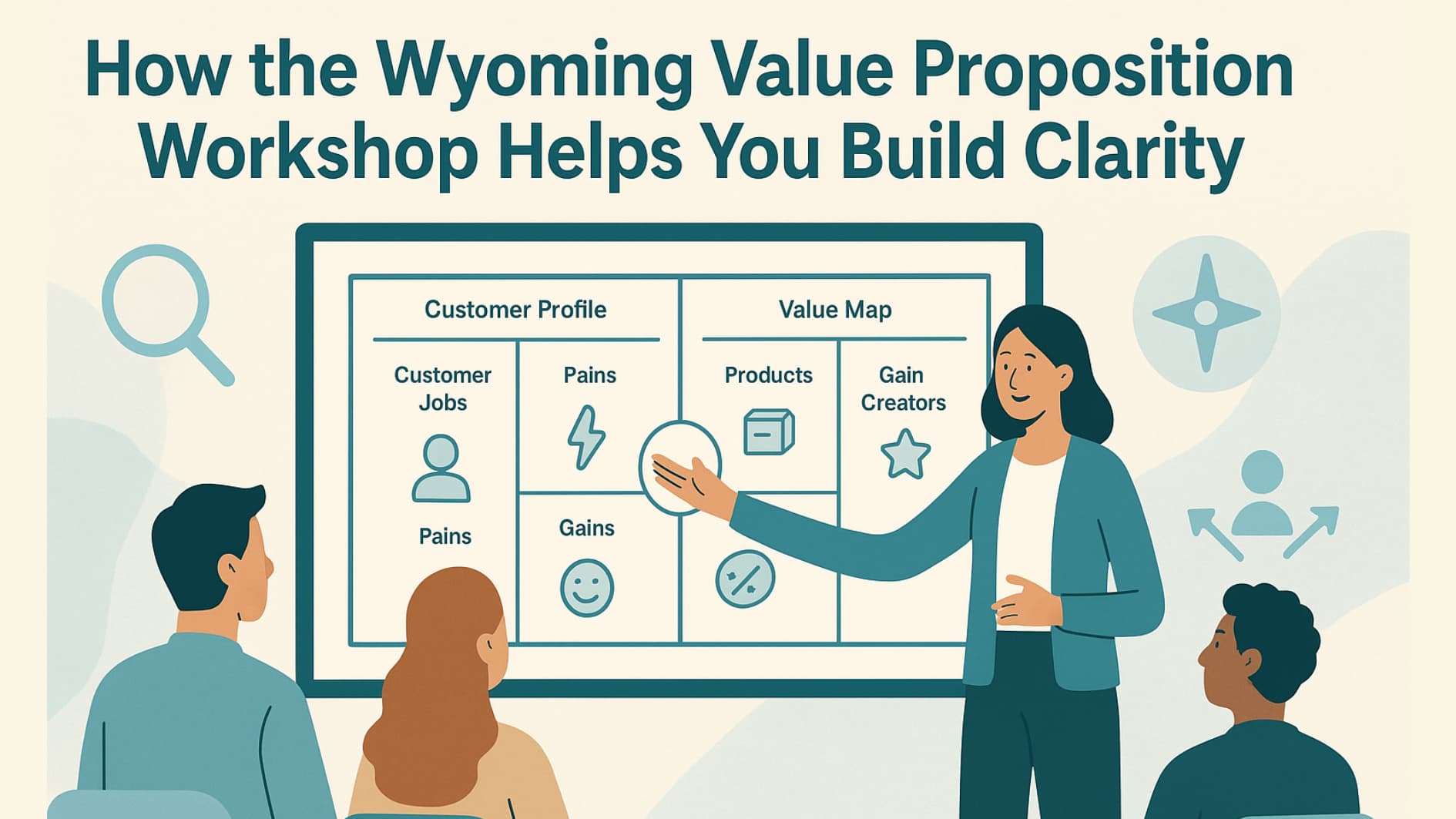
You need a clear value proposition if you want customers to understand why your business matters. Without it, your message gets lost. We've seen this firsthand while helping teams at Hyperke improve their outbound sales.
Many SaaS and service companies come to us thinking they have a traffic problem, but what they really have is a clarity problem. Their target customer can’t see the real value in front of them, so cold emails and calls don’t land the way they could. When the message becomes clear, everything gets easier.
If you want that kind of clarity, keep reading.
Key Takeaways
Weak value propositions lead to wasted time, money, and poor customer fit.
The Wyoming Value Proposition Workshop teaches businesses how to use the proposition canvas to better understand their customer profile and align their products and services with real needs.
Wyoming businesses gain practical tools, clear messaging, and stronger growth by learning proposition design rooted in simple design thinking.
The High Stakes of a Weak Value Proposition
When a business doesn’t have a strong value proposition, everything around it wobbles. We've watched companies waste time and money chasing the wrong customer segment. They keep hoping someone “out there” will listen. Marketing budgets disappear. Sales teams feel frustrated. And the message never lands.
A weak value proposition also leads to real losses. Businesses with unclear messaging often struggle with customer fit, slow revenue growth, and poor retention. Many Wyoming businesses eventually realize that clearer messaging helps them connect with the right target customer and avoid wasting effort on audiences that were never a good fit.
We’ve worked with teams who were doing all the right actions, emailing, calling, showing up, but still not getting traction because the foundation wasn’t solid.
Research backs this up:
Companies with clear value propositions grow faster and keep customers longer.
Many startups fail simply because they don’t match their product to actual customer needs.
It hurts to see potential get lost in the gap between what a business thinks customers want and what customers truly need. But the good news? This gap can be fixed. And Wyoming’s Value Proposition Workshop was built for that exact reason.
Wyoming’s Solution: The Value Proposition Workshop
The Wyoming Value Proposition Workshop gives local businesses a simple, structured way to understand their customers and build stronger messaging. It brings together entrepreneurs, small business owners, and teams who want clarity, not fluff.
The workshop usually runs for about five hours and uses a mix of group work and guided learning. It’s accessible, friendly, and rooted in real business problems. When I first reviewed some of the workshop sessions, one thing stood out to me: it doesn’t drown people in theory. It focuses on usefulness. And as someone who works in sales-driven growth every day at Hyperke, I can confirm that usefulness wins every time.
The workshop uses the Value Proposition Canvas, a practical tool that breaks your idea into two sides:
Your customer
Your offer
This is not about guessing. It’s about clarity. It’s about walking out with a message that fits your market instead of hoping it will.
As you gain clarity from the workshop, our lead-generation for local marketing agency service can help you turn that clearer messaging into qualified outbound opportunities.
Demystifying the Value Proposition Canvas
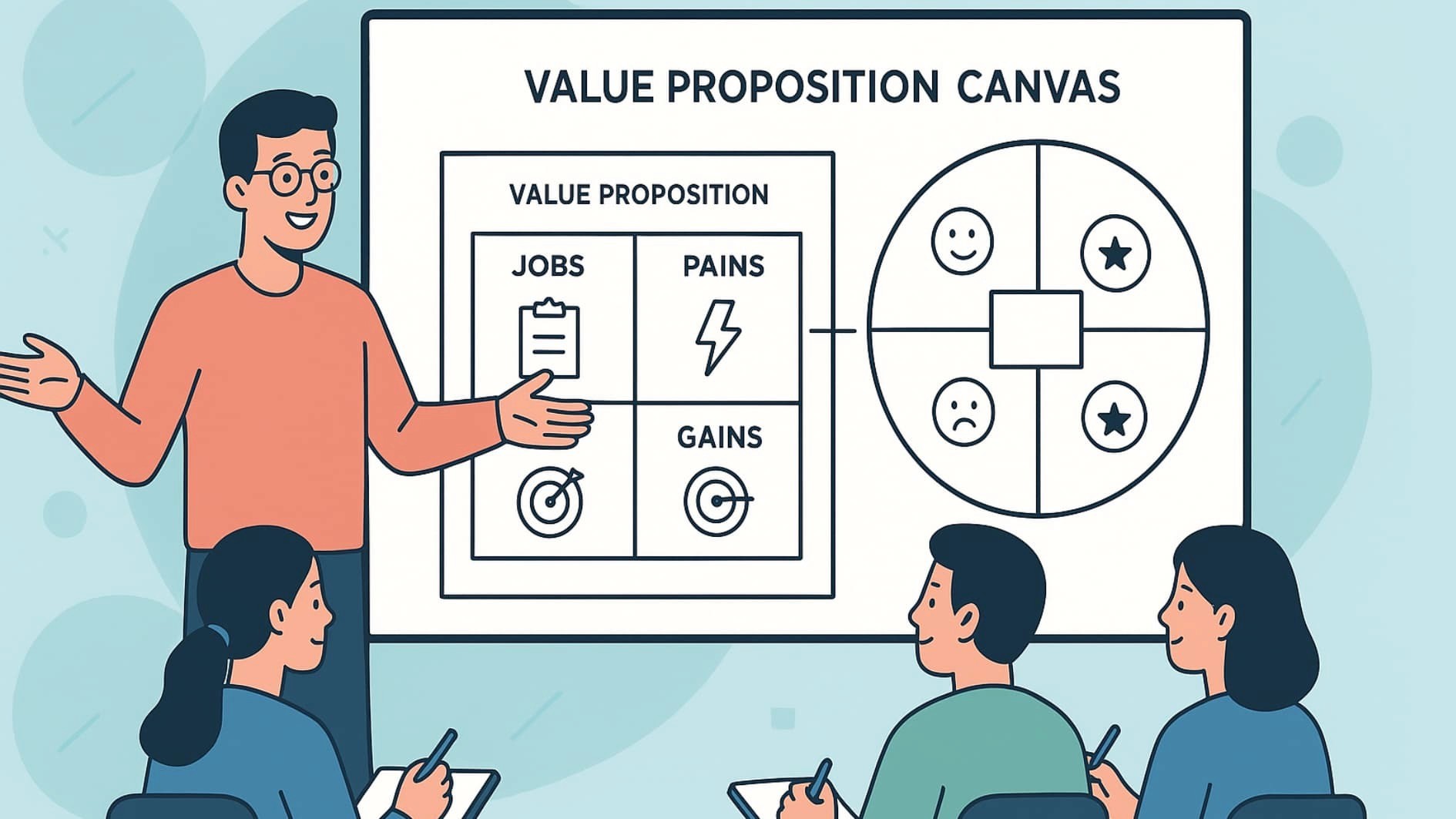
The proposition canvas is simple to learn, but powerful when applied. It helps you understand your customers deeply and match that understanding with what you offer.
According to Gitnux statistics, 87% of consumers have stopped doing business with a company after a poor customer experience, underscoring just how costly unclear or misaligned messaging can be.[1]
It’s part of smart design thinking, and once you learn it, you can apply it again and again as your business grows.
Customer Profile
This section helps you see your customer clearly. Many Wyoming business owners We've spoken with realize during the workshop that they were targeting everyone and no one at the same time. The customer profile fixes that by breaking things down into:
Customer jobs: What your customer is trying to do. These can be functional, social, or emotional.
Pains: What makes their work hard or frustrating.
Customer gains: What they want more of (time, ease, better results, confidence, etc.).
A strong customer profile usually comes from asking good trigger questions. Simple questions like,
“What slows them down?”
or
“What outcome makes them feel successful?”
work surprisingly well.
Value Map
This section focuses on your business:
Your products and services
Your pain relievers, how you reduce customer struggles
Your gain creators, ow you add something extra they care about
When these two sides align, you get a message that feels natural and true. That alignment is the heart of proposition design. As teams work through the proposition canvas, they often discover how much clarity comes from expressing their value in a way customers instantly understand.
Building Your Value Proposition: A Step-by-Step Guide
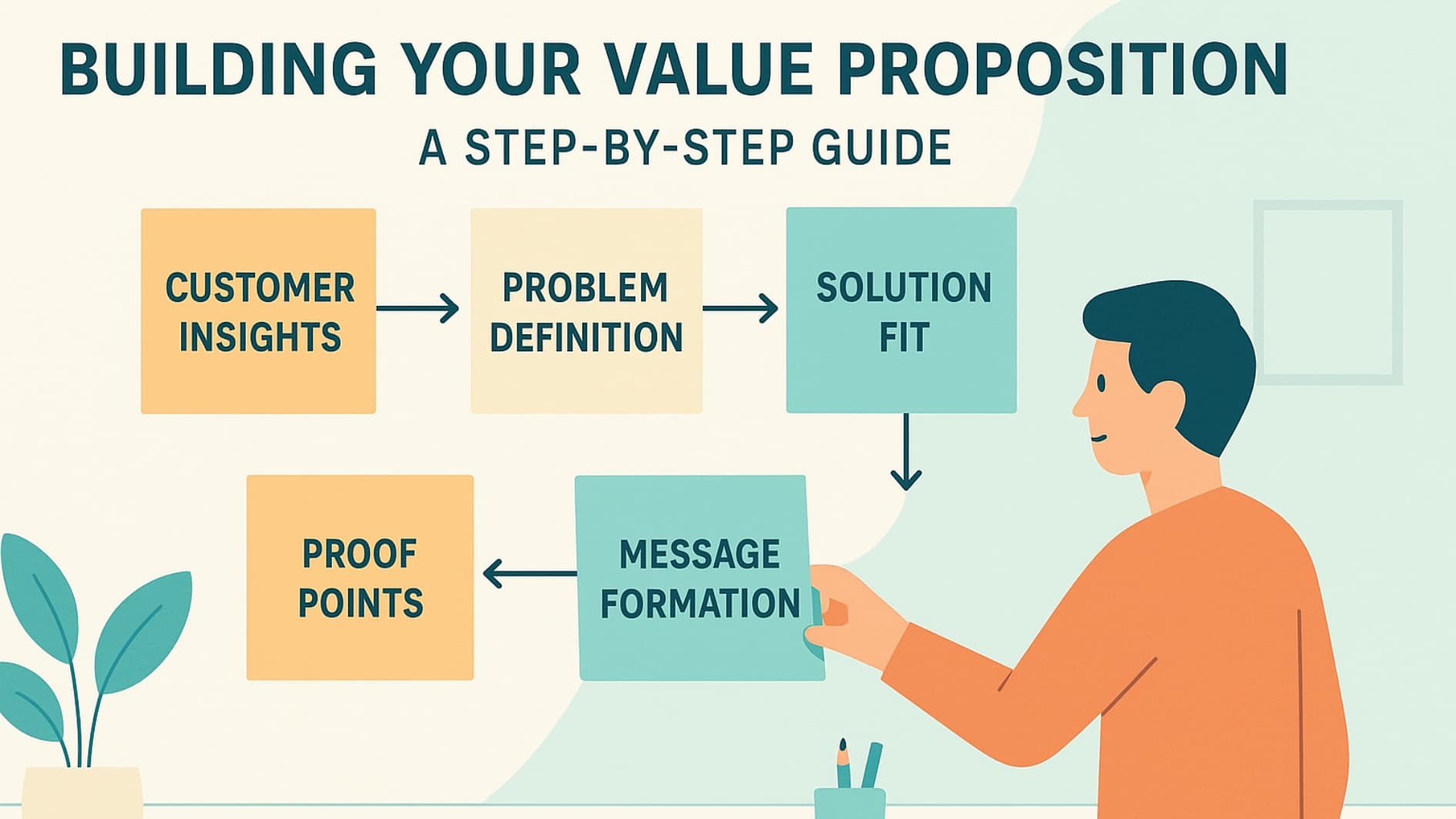
This is the same process the Wyoming Value Proposition Workshop teaches. We've used this flow inside Hyperke as well, especially when we help companies refine messaging before launching outbound campaigns.
Step 1: Understanding Your Customer
Everything starts here. A value proposition isn’t about what you want to say. It’s about what your customer needs to hear.
Ask the trigger questions:
What jobs are they trying to complete?
What stops them?
What frustrates them?
What do they want to gain?
This part often surprises business owners. They realize their customer pains aren’t always about price or speed.
In fact, PwC's Customer Loyalty Survey reports that 26% of consumers stopped using a business in the past year, and many of those exit because of poor experiences rather than cost.[2]
Sometimes the real pain is uncertainty. Sometimes it’s overwhelm. Sometimes it’s the fear of wasting effort.
And customer gains aren’t always giant wins. Sometimes it’s saving ten minutes. Sometimes it’s feeling more confident in their choices.
Knowing the difference helps you build a message customers can trust.
Step 2: Mapping Your Value
Now look at your own side.
List your products and services clearly. Don’t dress them up. Just write them down.
Then ask:
Which ones act as pain relievers?
Which ones act as gain creators?
This is where many companies have aha-moments. They realize they’ve been talking about features, not value. They see how a simple service or product solves a real problem, but they weren’t saying it clearly.
At Hyperke, we see this constantly during outbound campaigns. When a company finally ties a product to a real pain reliever, outreach becomes easier. Response rates go up. People understand what’s being offered.
Once you’ve mapped how your products relieve pains and create gains, you can scale that clarity into new markets through our wholesale expansion service.
Step 3: Achieving Fit
Fit is when both sides match:
Customer jobs ↔ What you help them do
Customer pains ↔ Your pain relievers
Customer gains ↔ Your gain creators
This is where your proposition statement becomes clear. It’s the sentence that shows why you matter.
When a business finally achieves fit, everything feels lighter. Teams communicate better. Marketing becomes simpler. Sales becomes smoother. Customers connect faster. When both sides finally align, the proposition statement becomes easier to shape because it reflects what customers already care about.
Wyoming Businesses: Tailored for Success
Wyoming has its own rhythm. Businesses here work across wide distances, serve rural markets, and face seasonal demand. Many run with lean teams. That means every decision matters.
The Wyoming workshop understands this. It’s built for real Wyoming challenges, not generic business theory.
We've spoken with Wyoming business owners who attended, and many say the same thing: the workshop helped them finally understand their customer segment in a way that felt human and local. It helped them see what their customers were actually trying to achieve day to day.
For example:
A retail shop clarified its messaging for local customers instead of trying to sound like a national brand.
A service provider realized their clients cared more about reliability than price.
A tech team discovered that their users valued simplicity more than features.
These small shifts made a big difference.
Real-World Examples of Powerful Value Propositions
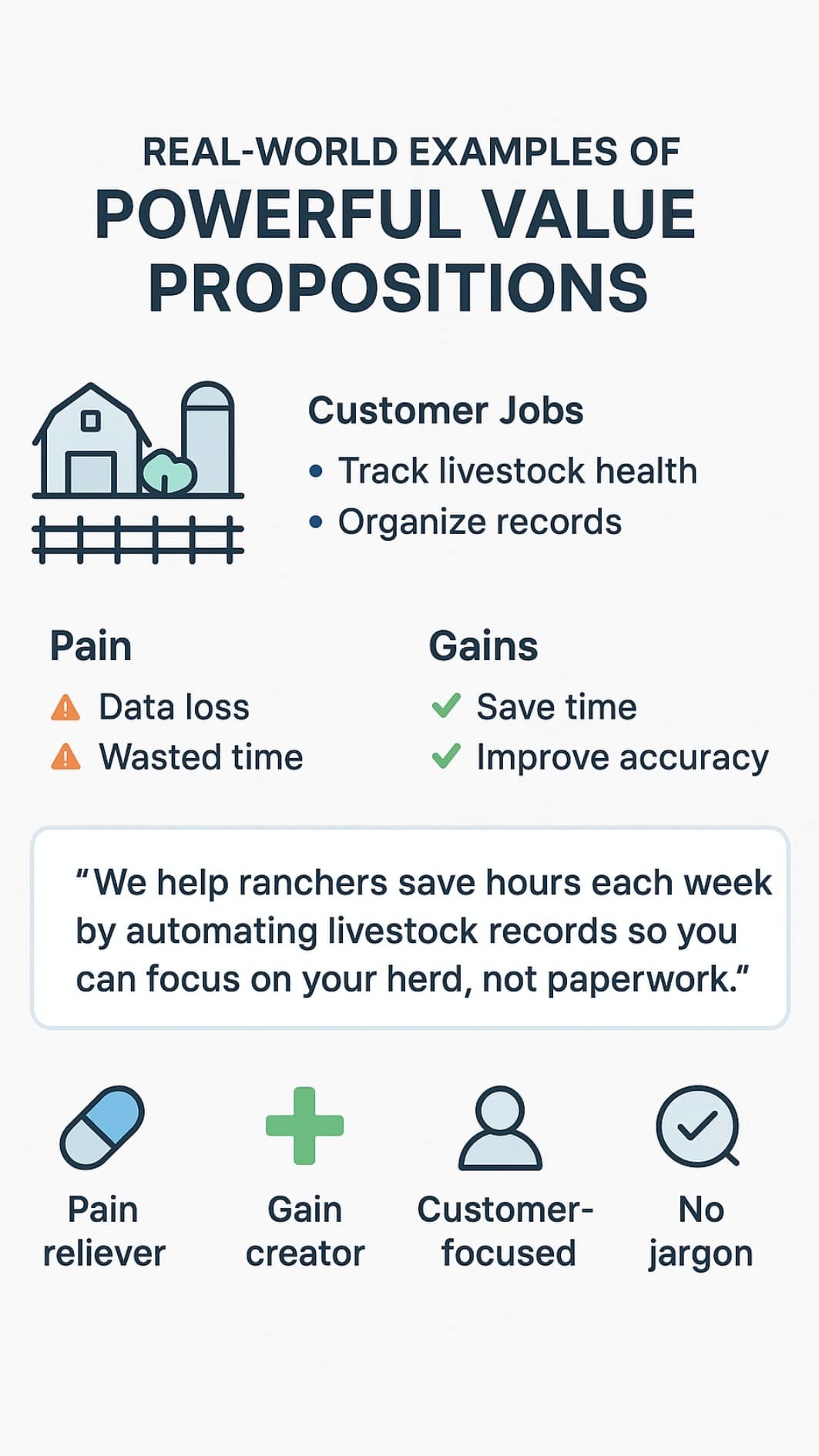
Here’s a simple example based on a Wyoming business scenario:
A ranch management software company
The customer jobs include tracking livestock health and keeping records organized.
The pains include losing data, wasting time, and dealing with paperwork.
The customer gains include saving time and improving accuracy.
A strong proposition statement for them might be:
“We help ranchers save hours each week by automating livestock records so you can focus on your herd, not paperwork.”
Why it works:
Pain reliever: removes manual work
Gain creator: saves hours
Customer-focused language
No jargon
This is exactly the kind of clarity the workshop helps businesses build.
Take the Next Step: Join the Wyoming Value Proposition Workshop
If you’re a Wyoming business struggling with messaging, customer connection, or focus, this workshop is worth your time. It teaches you how to use the proposition canvas, how to understand your customer profile deeply, and how to shape your products and services into a message that resonates.
You can register through the Wyoming Small Business Development Center or Central Wyoming College. A few hours of learning can give your business direction for years.
FAQ
How can I use design thinking to understand my target customer better in a Wyoming Value Proposition Workshop?
Many people use design thinking to understand what a target customer needs before shaping any idea. We often start by looking at customer jobs, customer gains, and pains so we can see what truly matters to them. Then we map these insights into a customer profile, which helps everyone stay grounded when creating products and services that actually help real buyers.
What are trigger questions, and how do they support proposition design during the workshop?
Trigger questions guide us when we feel stuck. They help us ask simple things like what customer jobs matter most or which pain relievers and gain creators could work. When we use these questions inside proposition design sessions, we notice blind spots faster. They also make it easier for anyone to form a clearer customer segment before moving deeper into the process.
How does the proposition canvas help in shaping useful products and services?
Many teams use a proposition canvas because it breaks everything into clear parts. On one side, we explore customer gains, pains, and daily tasks. On the other, we match them with pain relievers, gain creators, and products and services that could solve real issues. In our experience, the canvas keeps ideas honest and stops us from guessing what people want.
What makes a strong proposition statement in a Wyoming Value Proposition Workshop?
A strong proposition statement comes from understanding the customer profile rather than writing fancy lines. We usually combine what a customer segment needs with what we can offer through focused products and services.
By linking customer jobs with real solutions, the statement becomes simple, direct, and grounded. Anyone reading it should easily understand why the offer matters.
How do customer profiles influence proposition design during the workshop?
Customer profiles play a big role because they show how a person thinks, works, and decides. When we build a profile, we list their customer gains, pains, and daily tasks so the team sees them as real people. This makes proposition design smoother because we can match pain relievers and gain creators to actual needs.
It also helps teams avoid making products and services that do not connect with real buyers.
Conclusion
A strong value proposition is not luck, it’s a skill, and Wyoming’s Value Proposition Workshop gives you everything you need to build one. Through design thinking, proposition design, and hands-on use of the proposition canvas, you learn how to understand your customer segment, map your value, and create a message that works.
If you’re ready to build a value proposition that feels clear, strong, and customer-focused, this workshop is a smart next step.
Ready to get absolute clarity on your value? Talk with Hyperke today and turn your ideas into a compelling proposition.
References
https://gitnux.org/customer-experience-in-the-consumer-products-industry-statistics/
https://www.pwc.com/us/en/services/consulting/business-transformation/library/customer-loyalty-survey.html/